


ai in filmmaking: benefits vs risks
Credit: I, Robot, https://www.pluggedin.com/movie-reviews/irobot/
The digital director
AI is already transforming what is seen on screens, whether at home or in a theater. The use of AI in films has sparked global controversy due to its potential impact on jobs and creativity. While some view AI as a useful tool that can enhance efficiency, others voice concerns about its effect on the human element that defines storytelling.
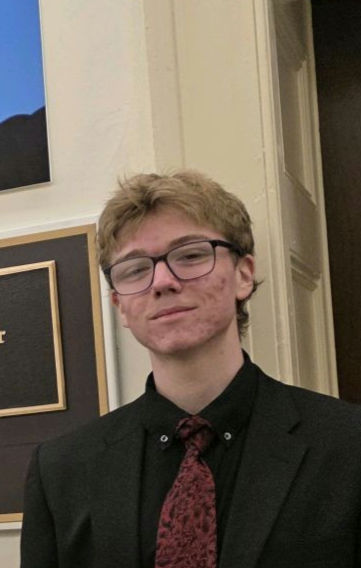
This analysis delves into the three phases of movie production, exploring the impact AI has on each. It includes both the risks and benefits of AI, particularly its effects on creativity, efficiency, and labor. In addition, it incorporates insights from writer and artist Coleman Stevenson, who provides insight on the implications of AI on artistic expression.
Pre-production

The pre-production phase holds significant concerns tied to artificial intelligence in filmmaking. Creativity is at a peak in this stage, generating ideas that inspire screenplays and key artistic decisions. As AI continues to grow, striking questions rise about creative ownership and originality.
In writing, authorship doesn't dissipate while using AI as a tool, but it may become blurry or less defined. Relying on AI to generate a screenplay could result in a diluted voice, where the final product no longer reflects creative ideas. Instead, it will sound data driven or like a combination of screenplays that have already been produced.
Stevenson provided insight on the emotional connection to the process of art.
"A true artist is very process oriented... we would never want results without process."
Furthermore, if writers begin to lean too much towards artificial intelligence, then who's to say that future screenplays wouldn't feel formulaic? Pre-production is a phase of experimentation, utilizing AI could instead shift the creative aspects into a field of optimization. Ideas will be shaped into effective engagement, instead of bold artistic decisions.

When used scarcely, AI can be a tool to assist production. Brainstorming, outlining, and research are all methods that can be used to help a writer. As long as AI is not used to eradicate creative outlooks, then it can be a practical tool to save time.
production

This phase requires hands-on expertise. Filming requires a team of individually skilled professionals to piece it all together. When you throw AI in the mix, jobs and skills could be at risk. Traditional methods of production have historically kept work ethic flowing, AI could disrupt this.
By using artificial intelligence to help in production, various career skills may become weakened. Camera operators, technicians, and assistant directors could have shifted responsibilities, risking their personal endeavors and career goals.
Stevenson elaborated on her thoughts about the future of AI and its impact on jobs.
"It may get to the point where some industries will put profit and ease... over true artistry... but I think it will revert. I don't believe it can ever replace real art."
Actual on-set work has always been a memorable part of the journey while making a film. Emotion and passion are at a peak, strengthening connections amongst the entire crew. Working in unison, an entire team of devoted artists are able to create a monumental vision.

Stirring AI into a team of this caliber could disrupt the beauty of filmmaking. Film is a home for all mediums of art and is pieced together by human ambition. Humans create art. Humans imbed a deep understanding of each other and are the only species on Earth capable of this. AI is never going to be capable of understanding, which is a undeniable part of filmmaking.
post-production

Editing and revision may be the most temping stage in filmmaking to use AI. The process is often long and tedious, frequently stalling the entire production timeline. Through its complex process and various aspects, it can also drive budgets significantly higher.
AI offers a concise solution: it can reduce both costs and time. Producers and studios are drawn to this potential. However, this type of efficiency concludes with serious moral dilemmas. While AI can accelerate the release of a film, it comes at the cost of human jobs and creative integrity.
The topic of creative integrity and the collaboration with AI sparked a powerful message from Stevenson.
"AI runs through the entire essence of us, our whole being, all of our experiences, everything... Every emotion we have, all of that, is the filtration system for our inspiration, and AI does not have that.
As previously established, AI can only pull from pre-existing works. While this could produce a polished result, it could start to feel repetitive. Editing styles would be cast aside in exchange for lack of originality. Human editors provide emotional perspectives and intuition. Without that human touch, films risk individuality, which makes them memorable.

Editing is central to storytelling, piecing together the narrative from various segments. This type of work requires a range of specialized skills to ensure the film is engaging, coherent, and emotionally impactful.
Many people dedicate their lives to mastering post-production, and they could become a diminishing presence if AI is used as a cost-cutting tool.
benefits
Faster production timelines.
Lower production costs.
Enhanced editing efficiency.
Improved visual effects (VFX).
Improved sound design.
Accessibility for smaller creators.
Pre-production support.
Multilingual and global reach.
risks
Job displacement.
Loss of human creativity.
Lack of originality.
Ethical concerns.
Over-reliance on technology.
Quality control.
Bias in AI systems.
Reduced collaborations.
Copyright challenges.
Impact on artistic identity.
the future
AI may be an inevitable advancement in technology; however, its growth in filmmaking poses a serious threat to artists and their creative voices. The current controversy surrounding its use is justified, with many fearing that AI could erode the foundation of artistic expression. While some people argue that a balance can be achieved, the risk of cost-cutting being prioritized over human input still remains. For filmmakers and artists alike, this is more than a technological shift; it represents a loss of identity within their own work. Without limits, AI has the ability to diminish human creativity, conveying a harsh reality for artists across the industry.
Do You Think AI is Good or Bad?
Good
Bad


Comments