


OCD - Its Effects, Facts, and My Personal Experience

Updated: May 8

My personal experience with OCD

There are many things that stand out in my life: the importance those I love have to me, my love of running, and my passion for the artists I listen to. Each of these things play a large role in my life and have shaped me into who I am today. I am ever-evolving, and each day is a new experience. However, there has been one thing that has played a large role in my life that is not as obvious to the naked eye - my OCD. I have dealt with my OCD since I was around 6 years old. Since it’s been going on for so long, I can’t remember a time where I didn’t feel its effects. OCD has shaped me in many ways, and to this day, it still plays a large role in my personality and my actions. It’s a lifelong condition that I must learn to grow with rather than try to put an active fight up against.

OCD has shaped how I think, react, and process every situation I am in. One way I like to describe OCD is as a magnifier of pre-existing anxiety. For example, if I am already anxious that I may be sick, my OCD will take that worry, scale it up, and make it seem like a significantly worse issue than it is. Back in September of 2024, I went through severe health anxiety. For around 5 months, I spent each day convinced I was deathly ill. I couldn’t sleep at night, I couldn’t focus on school, and I lost interest in my hobbies. My fear of being sick and dying consumed my every waking moment; I couldn’t rest or settle down. Looking back at this, though, I feel glad I went through this experience. At the moment it was difficult, but it taught me valuable lessons that I use to this day to help relieve my anxiety. When I am faced with similar obsessions that I can’t quite push aside, instead of worrying that they may be true, I remember that it is my OCD and that I have the ability to overcome it. A big portion of this is also finding my own self-worth and valuing myself as a person.
OCD Facts

According to the International OCD Foundation, OCD affects about 1 in 40 adults, which is approximately 8.2 million people. OCD can affect any age, but typically begins to first appear in those aged 7-12 years old, or in their late teens or early adulthood. The exact causes of OCD are not known, but genetics and environmental factors play a large role, according to Queensland Brain Institute. A multitude of environmental influences can increase the risk of the development of OCD, and while not directly causing OCD, “-stressful life events can trigger the onset of OCD symptoms in people with a genetic predisposition.” Symptoms of OCD in children include compulsive behaviors, such as repetitive hand washing or seeking assurance, irritability and outbursts, and asking parents to participate in their compulsions. For adults, symptoms of OCD include those that affect children as well as disturbing, intrusive thoughts, fear of harming others or self, and repeatedly checking that doors are locked, appliances are shut off, or other things considered a safety hazard are in the correct position.

As per Columbia Mental Health, those with untreated OCD can be left with feelings of frustration, helplessness, and fear from the repetitive intrusive thoughts that can lead to stress, anxiety, and depression. This constant struggle can also lead to difficulties with people’s social lives, work, and school. OCD can make people feel trapped, leading to feelings of loneliness and the fear of burdening others.

OCD also affects the shape of the brain. Since the 1980s, researchers have “...extensively used brain imaging techniques to study the structure and function of the brain in people with OCD compared to people without OCD,” according to the International OCD Foundation. This research discovered that specific brain structures and patterns of brain activity may be involved in the symptoms of OCD. In a study that involved 72 people with OCD and 72 healthy people, it was discovered that some regions of the brain differed in size in those with OCD compared to the healthy individuals. On average, those with OCD had smaller prefrontal regions, which are important for emotional processing, and larger striatum, which is “a set of regions deep within the brain known to be involved in repetitive behavior.” This means that OCD goes beyond just being a mental condition; it also affects those with it physically.
Reflection - Final Words
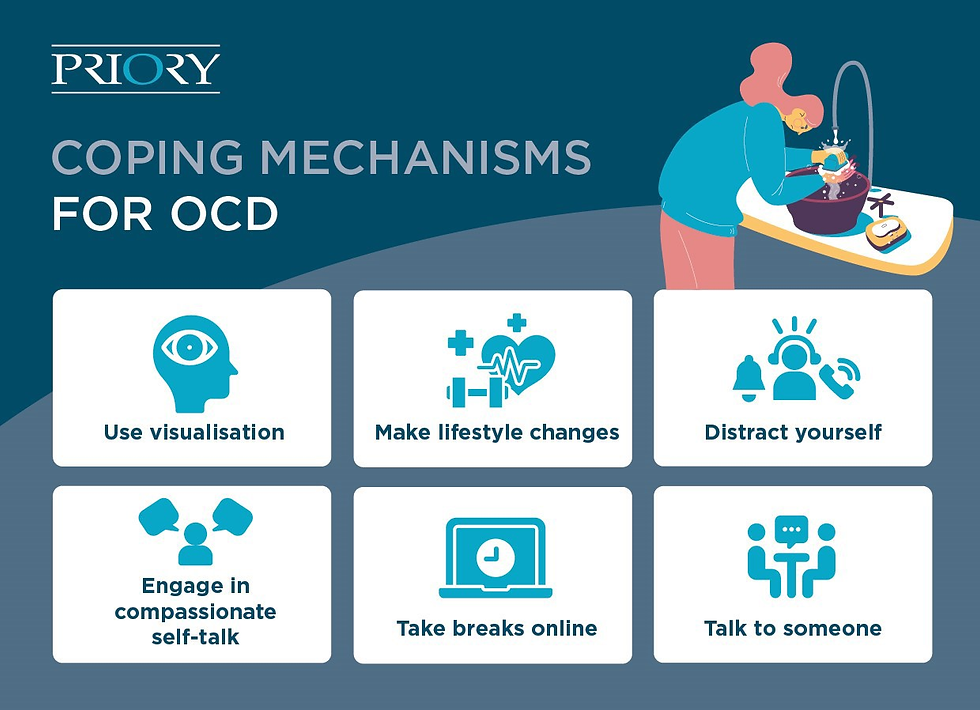
From my own experience, OCD is a difficult condition to explain. My fears are irrational, and that becomes more obvious to me once I state them out loud. Explaining OCD and its effects can be rough, and I have found that learning to be patient with yourself helps tremendously. There are not always words to describe how OCD feels, and there is no pressure to fully put out there exactly what it is like.
It’s important to remember your value and your worth, as OCD requires patience from both you and those around you. It is also important to remember not to seek constant reassurance. When it comes to OCD, it is tempting to seek out that comfort from others, but that comfort only lasts a moment. With time, this search for reassurance becomes repetitive and constant, and can put a strain on your relationships. It is important to find ways to self-soothe and to regulate your emotions, such as journaling, exercising, or doing a hobby you enjoy. Self-reflection also goes a long way, and finding the root cause of your anxiety is helpful. There is usually a deeper reason for anxiety from OCD from my own experience, and finding that cause has helped me greatly. An example of this is my fear of abandonment. There are situations I have found myself overthinking about, but when I look at the core of it, it comes down to that fear. Once I realize this, I realize that my thoughts and worries are irrational and that it’s going to be okay.
OCD is a lifelong issue, but not one that can’t be helped. It is important to remember that you are not alone and that help is available. Support for OCD can be found at https://iocdf.org/about/contact-us/.



Comments